
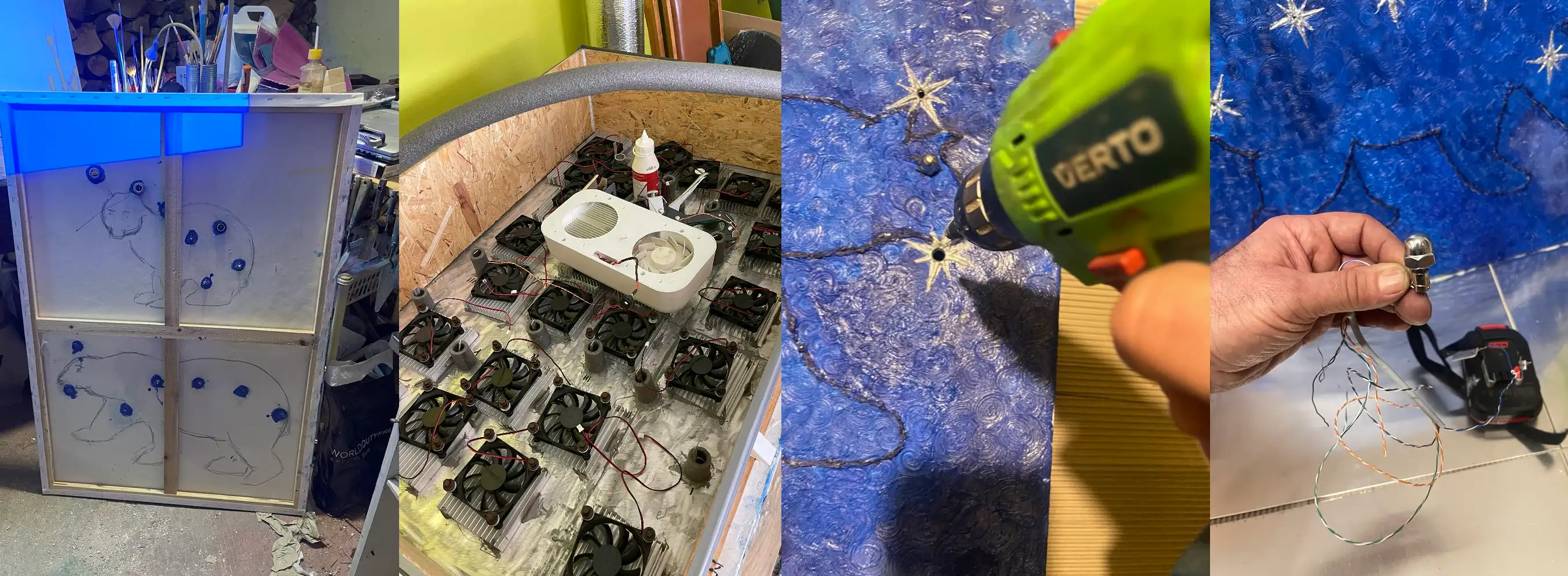
From working prototype to public presentation
The Sentient Canvas
We have built a working multisensory painting. Now we are refining how such artworks are created — so people can safely touch them, explore them and experience them in public spaces. Accessibility is not an addition to this project. It is its starting point.
From Prototype to Public Experience
XperiBase has already developed a working prototype of a multisensory painting — an artwork that can be touched, explored and listened to.
Visitors explore textures with their hands, notice changes in temperature, encounter subtle scent cues and trigger audio descriptions through touch. The experience unfolds slowly — through curiosity and physical presence.
The next phase focuses on refining the method itself — making it durable, safe and repeatable, so that more artworks can be presented publicly in galleries and cultural spaces.
Our goal is not to build a gadget. It is to perfect a new artistic medium.
This is the direction we are working towards
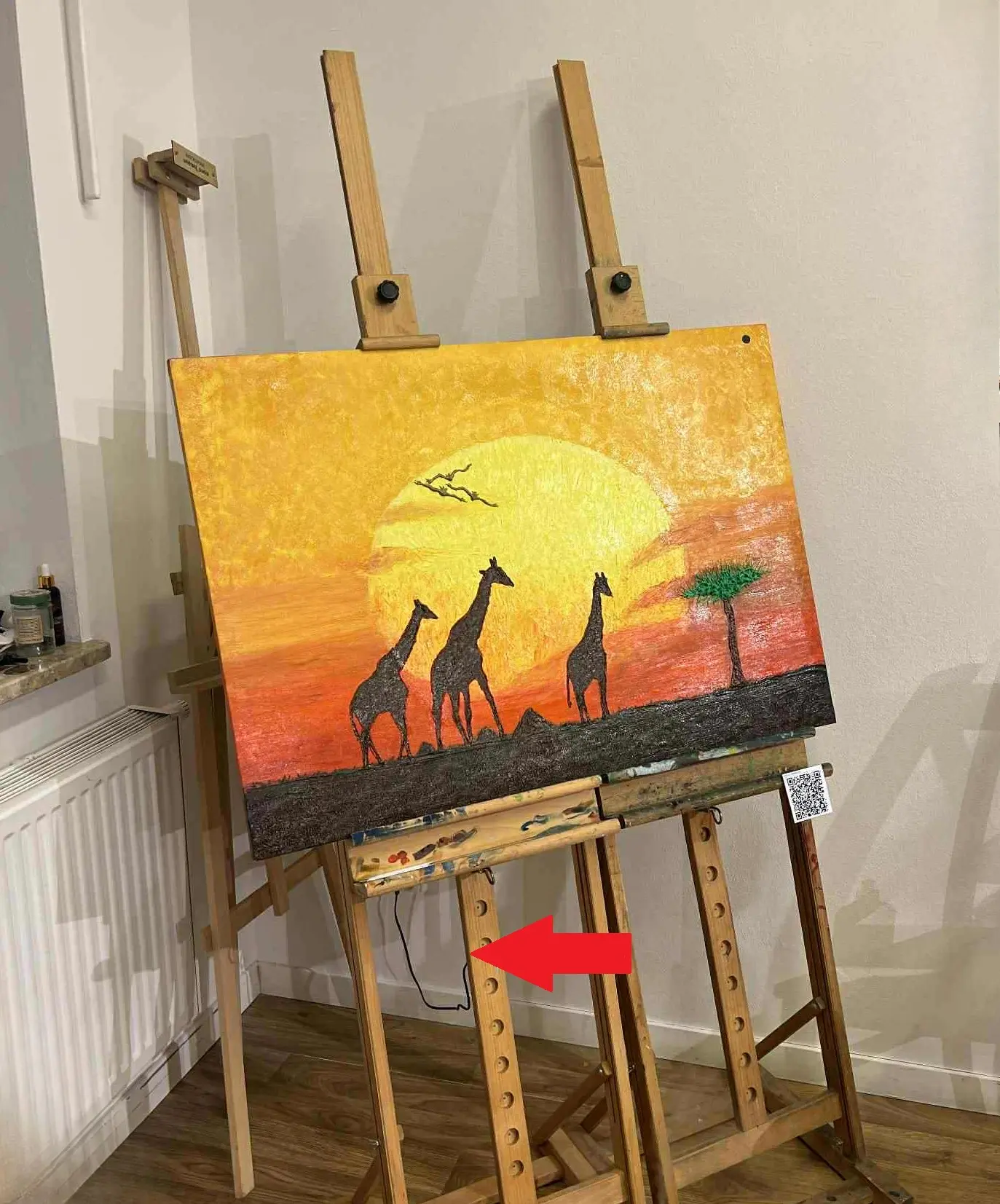
The final outcome of our work is intended to function like this: a physical artwork that can be explored through touch, temperature, scent and sound. We already have a visualisation of the final effect we are working towards.
See the Interactive Multisensory Artwork DemoWhat we are building
- A hidden internal system that allows temperature shifts, scent zones and touch-activated narration.
- A modular internal structure that helps us build artworks in a consistent and reliable way.
- A method of composing sensory contrasts — warmth and coolness, texture and vibration — as artistic tools.
- Ongoing testing with blind and neuroatypical participants to ensure clarity, comfort and dignity.
“We do not add accessibility at the end — we prototype with accessibility as the starting constraint.”
Invisible Technology, Visible Experience
The technology inside the frame supports the artwork — but it is never the main focus. What matters is the human encounter with the surface.
The visitor touches metal, relief, texture. The engineering remains hidden, allowing the experience to feel natural and calm.
In this phase, we are refining the internal systems so that artworks can function reliably in public settings.
The technology must disappear. The artwork must remain.
Safety by design
No exposed electronics on the touch surface. Enclosed modules and low-voltage architecture.
No “tech anxiety”
The interface is tactile exploration — not screens, apps, or control panels.
Modular Sensory Palette
Inside each artwork, a modular 50×50 mm grid allows us to compose sensations — much like a painter composes colour. Heat, coolness, vibration and scent become quiet narrative tools, shaped around how people actually explore with their hands.

Thermal Inserts
People can feel warmth in one area and coolness in another — creating intuitive contrast and inviting exploration.
Scent Zones
Subtle scent zones can support imagination and memory, without dominating the space.
Haptics
Gentle vibration cues respond to touch, helping visitors notice details and follow the artwork’s rhythm.
Touch Logic
Touch-triggered audio can explain elements of the artwork — without screens or complicated interfaces.
Intuitive Navigation by Sensory Contrast
Our central question is simple: how can sensory contrast guide the hand without instructions? We explore combinations such as cool points on warmer surfaces, or a gentle vibration cue embedded in a neutral texture.
Guidance
Contrast can act like a tactile signpost, shaping a route through the artwork’s narrative.
Joy & discovery
People recognise textures, play with temperature, notice scents — and the artwork becomes an experience.
Comfort
We keep sensory intensity within comfortable ranges — especially important for visitors with sensory sensitivity.
We observe how people move through the artwork — whether contrast alone helps them follow its intended path.
Current Development Areas
Safety, Accessibility & Responsible Design
- Accessibility requirements (blind, partially sighted, neuroatypical).
- Risk review: touch safety, heat/cold limits, scent exposure, cleaning protocol.
- Safeguarding for workshops and participant consent process.
Deliverable: safety & ethics pack + test protocol.
Controller Refinement (XperiBase Neuron)
- Touch sensing stability in real public conditions.
- Modular inputs/outputs for thermal, scent, and haptic inserts.
- Fail-safe behaviours, diagnostics and a practical servicing approach.
Deliverable: refined controller prototype + documentation.
Modular Grid & Insert Families
- Mechanical lattice optimised for repeatable builds.
- Thermal inserts (hot/cold points).
- Scent zoning inserts (local diffusion with control).
- Haptic inserts (vibration cues and patterns).
Deliverable: modular internal platform + insert families.
Public Testing & Exhibition Preparation
- Co-design sessions with target groups and institutions.
- Iteration based on contrast navigation and clarity.
- Comfort thresholds and overload-aware tuning.
- Pilot preparation and documentation for public display.
Deliverable: evaluation report + prototypes prepared for public presentation.
End output: multiple multisensory artworks developed for public presentation in cultural spaces — supported by testing and a repeatable method.
What This Project Makes Possible
Cultural accessibility
Artworks that can be touched and explored by blind and partially sighted visitors alongside others.
Inclusive innovation
A reusable approach that institutions can adopt and adapt — focused on experience, not devices.
Neurodiversity-aware design
Sensory environments designed with awareness of overload and sensitivity.
Art–engineering learning
Workshops and documentation that bridge creative practice with responsible engineering.
Why We Are Seeking Collaboration & Support
The prototype exists. Now we are refining the method and developing further artworks.
We are looking for funding and institutional partners to:
- Improve durability and exhibition safety standards
- Develop multiple artworks for public presentation
- Conduct structured user testing with blind and neuroatypical audiences
- Document and share our methodology
We want to continue developing multisensory artworks and make them available in public cultural spaces.
Help us bring multisensory art into public culture.
If you represent a gallery, museum, accessibility organisation, university, or fund — we would love to collaborate on pilots, testing and public presentations.